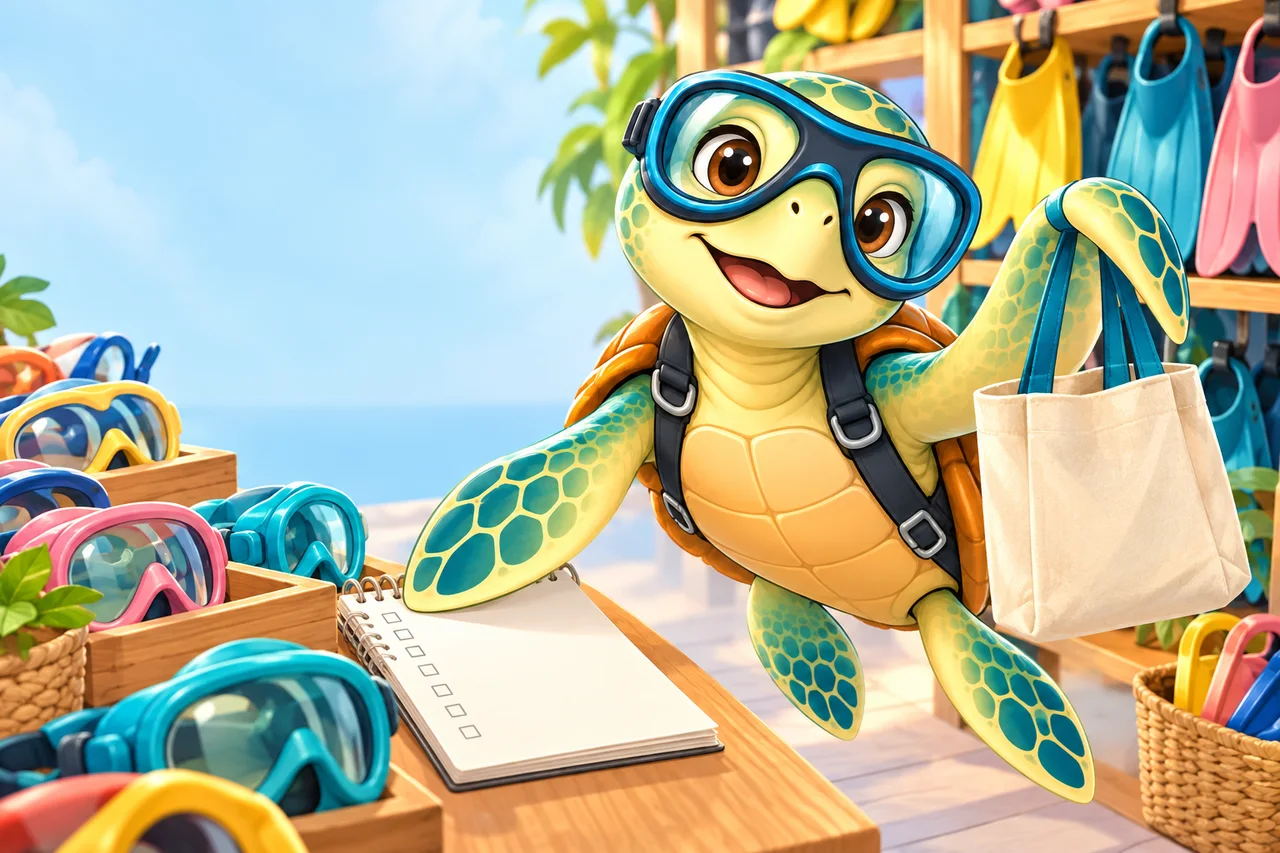
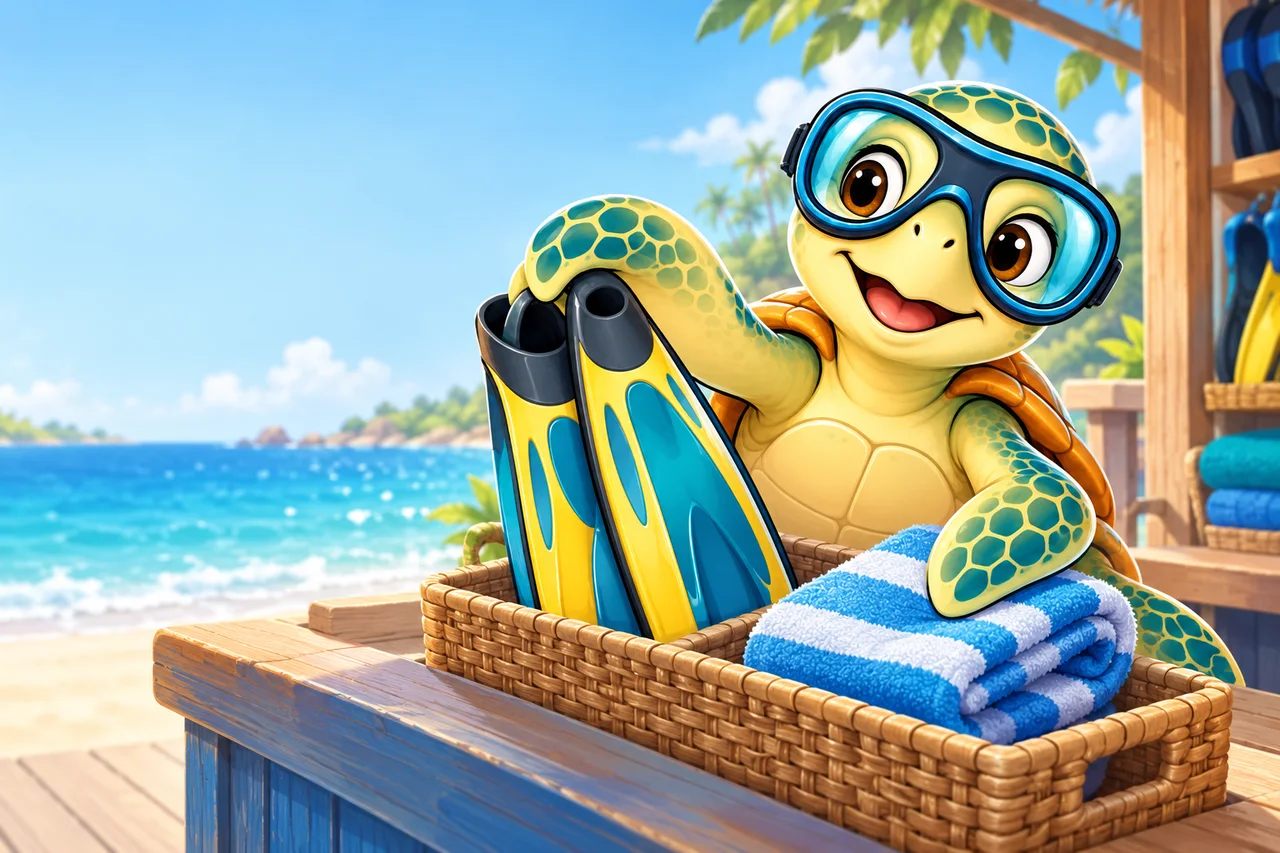
Equipment hire and equipment retail are separate capabilities, and a business offering hire is not automatically an equipment retailer or vice versa.
Rental ranges vary enormously. Some centres hire a basic recreational set; others hire drysuits, steel cylinders, stage cylinders, DPVs and technical configurations.
Rental equipment does not need to be new. It does need to be maintained, and that is what is worth assessing.
Use the booking to resolve rental questions
Identify the need
Give the operator the equipment type and size information.
Confirm the item
Ask which model, configuration and accessories are supplied.
Resolve familiarity
Discuss unfamiliar equipment with an instructor before use.
Agree the terms
Confirm collection, return, charges and responsibilities.
Original YouDive visual discussion guide. Use the article and its sources for context; qualified review is pending.
What to look for in rental equipment
Equipment does not need to be new. It does need to be maintained, and the signs are visible if you look.
- regulators that breathe smoothly and do not free-flow
- BCDs that hold air and inflate and deflate cleanly
- cylinders within current test date
- gauges and computers that work and are readable
- suits that actually fit, with intact seals and zips
- fins and masks in usable condition
Confirm sizing before you travel
This matters most in Tasmania, southern Australia and remote destinations, where specialist sizes — large drysuits in particular — are not always stocked.
Arriving at a remote destination to find no suit in your size effectively ends the trip.
Common questions
Is hiring cheaper than buying?
For occasional divers, yes. Divers who dive regularly usually find owning at least a mask, computer and exposure protection worthwhile within a season or two.
Should I hire a drysuit before buying one?
Yes. Fit and style preference vary considerably, and hiring for the course and early dives is the sensible way to find out what suits you.